Choosing what matters

#001
This week, I paid attention to what kept pulling me in.
What I stopped scrolling for on LinkedIn.
What caught my eye on Instagram.
What I found visually beautiful.
What made me pause and think about the kind of leader I want to be.
Across all of it, a simple pattern showed up.
The work that stayed with me was not trying to impress. It was trying to help. Tools, systems, and ideas that reduced friction without removing care, judgment, or humanity.
It reinforced something I have been feeling for a while now.
As it becomes easier to make things, deciding what matters becomes the real work.
I saw this in different ways.
Designers sharing how they think, not just what they ship.
Leaders talking about boundaries as a way to do better work, not less.
Systems built to grow and change instead of pretending they are finished.
A reminder that not everything worth doing should be measured or automated.
It also made me want to play.
Not play to produce something. Play to learn.
Over the weekend, I used a few new tools to help lay out a User Manual for Daniel, a new designer on the team, and to start experimenting with my own AI. Nothing polished. Nothing ready to share. Just enough to understand how these tools think, where they help, and where they fall short.
That part mattered to me.
Because the goal is not to use every tool available.
The goal is to be intentional about where tools help and where human judgment still matters most.
*Opinions are my own and do not represent NBC Universal.
Tools I played with
For exploration and learning, not endorsement.
Lovable https://lovable.dev
Beautiful.ai https://www.beautiful.ai
Plus AI https://plusai.com
Things that made me smile and think
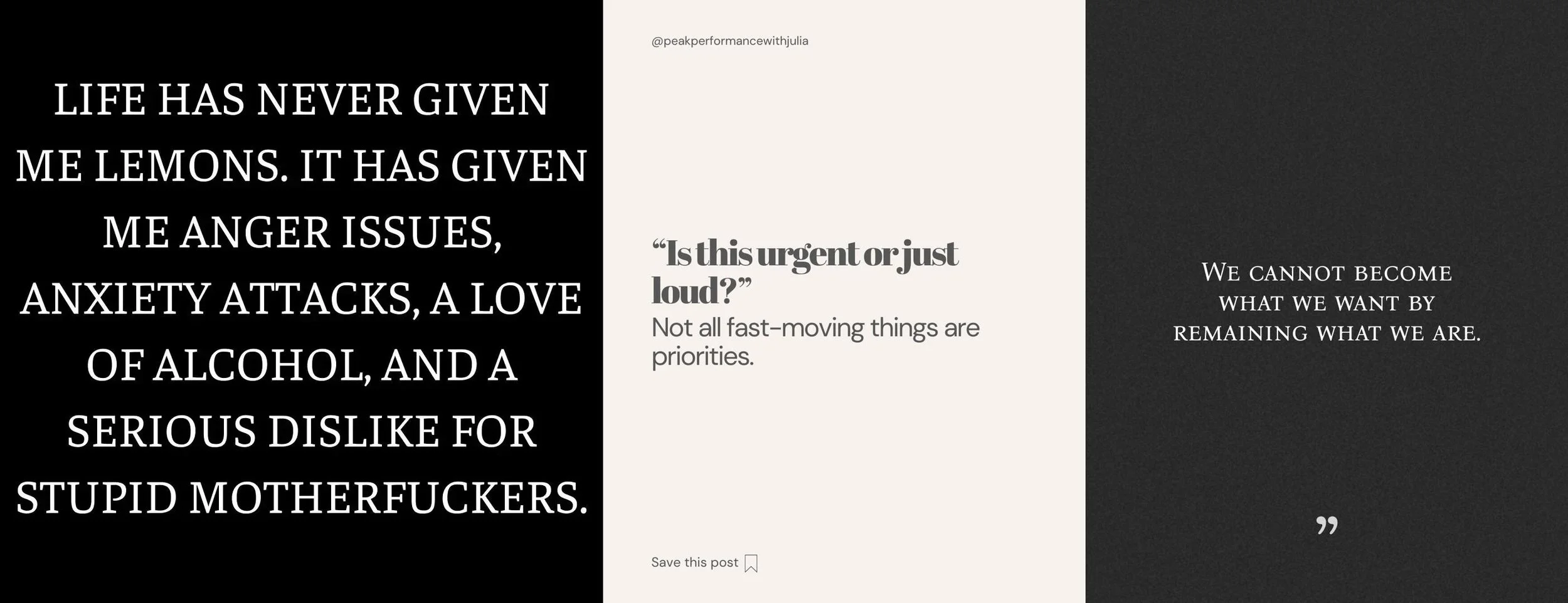
Leadership ideas that stuck with me
Posts and moments that challenged how I think about leadership, boundaries, and growth.
LinkedIn Post
Felix Haas shared a post about building a small internal tool to standardize email signatures and reduce everyday friction for teams.
https://www.linkedin.com/feed/update/urn:li:activity:7417916912086622208/Michaela Hackner shared a post about leading AI transformation through systems thinking, creating space for people to think differently, and treating AI as a tool that amplifies human judgment rather than replacing it.
https://www.linkedin.com/feed/update/urn:li:activity:7416582169273348096/Rich Holmes shared a post about using Claude Projects as a lightweight product operations system that synthesizes research, analytics, and strategy into recurring, executive-ready product health insights.
https://www.linkedin.com/feed/update/urn:li:activity:7416154801111269376/
Designs I couldn’t scroll past
Luke Des Cotes shared a post reflecting on meaningful product work at Metalab, highlighting design that shapes direction, defines categories, and leaves a lasting impact beyond the launch itself.
https://www.linkedin.com/feed/update/urn:li:activity:7417625599810220032/Eugene Trofimov shared a post breaking down Google’s AI design system, focusing on how gradients, shape, and motion are used intentionally to communicate thinking, direction, and trust in an evolving AI interface.
https://www.linkedin.com/feed/update/urn:li:activity:7417490840589115392/
Podcasts and videos
Good listens that gave me something to sit with.
Pablo Torre Finds Out
A thoughtful conversation on what we lose when everything is measured and scored.
🔊 Spotify Link
Articles I enjoyed
This article helped me not only consider the same approach for myself and my team but also explore how to accomplish my weekly post with less effort.
How I Used Claude Code to Build My Planning System
A grounded look at using AI to reduce mental load, not create more pressure.
Knowledge only becomes experience when applied.
Keep learning. Keep growing.
Have a nice weekend!
